









Planning a Northern Lights Trip With Aurora Apps and Why They Lie to You
Most aurora apps will talk you out of the best night of your trip. They hand you one averaged number, you read it as a no, you go to bed, and the sky puts on a show for everyone who ignored their phone. If you're planning a northern lights trip, the fix is a forecast that reads live conditions for your exact spot and reaches you out in the dark. That's what Aurora Admin does, and it's where this is going.
TLDR
- The single score most apps show you is a slow, global average. It misses short local displays completely.
- What actually predicts the aurora is the live solar wind, especially when it turns southward.
- The best viewing spots have the worst phone signal, so app alerts often never arrive.
- Aurora Admin reads the live data, gives a clear tonight and tomorrow night answer, and texts it so it lands even on one bar.
- Edmonton is the ideal base. It's the gateway to the Canadian north, with Fort McMurray and Banff both in reach.
Why Most People Miss the Show
So picture it. You drove four hours. You packed the flask, the tripod, the extra socks, the whole production. Your app promised a quiet night, so you did the sensible thing and went to bed in the cabin. And then morning comes and your phone is just, full of everyone else's photos. Green ribbons, pink curtains, all of it, taken from the exact ridge you very nearly stood on.
The aurora showed up. Your app missed it. And honestly? This happens to thousands of travellers every single year.
Here's what gets me. The science behind aurora forecasting is genuinely brilliant. We've got satellites a million kilometres out, models refreshing every half hour, the lot. None of that is the problem. The problem is the one number most apps shove in your face, and the moment they choose to show it to you. They don't just leave you in the dark. They actively talk you into staying home on a brilliant night.
The One Number Most Apps Get Wrong
So you open just about any aurora app and there it is, this one figure sitting there like a verdict. And people treat it like a traffic light, right? Green, go. Red, stay in. And that one little number has talked more travellers out of the best night of their trip than bad weather ever has.
Here's what it actually is, though. It's a planetary average. It takes magnetic readings from stations dotted right across the globe and smooths them all into one three hour block. So, a whole planet, three hours, mushed into a single score. Just sit with that for a second.
So picture the night again. The sky over your head kicks off at 9pm and fades by, say, twenty to ten. Gorgeous. But that little window? It gets dragged right down by two quiet hours happening on the far side of the Earth. So by the time the number catches up on your screen, the show you missed already looks thoroughly unremarkable on paper. You ended up judging a live event happening directly over your head using a slow global summary. It was never going to work.
The number isn't wrong, exactly. It's just the wrong tool for a decision that's happening right now, right above you, in one particular field.
What the Sky Is Actually Reacting To
Right, so the aurora is basically the planet flinching. The Sun chucks out a stream of charged particles, the solar wind, and when that stream slams into Earth's magnetic field, the sky lights up. That's the whole show in a sentence.
But here's the bit that actually matters, the bit the averages quietly hide. The solar wind carries its own magnetic direction. And when that direction points south, it links up with Earth's field like two magnets snapping together, and the energy just comes pouring in. Southward (negatively charged) solar wind is often the single best clue that the aurora's about to properly dance, and it'll tell you far more about tonight than any planetary average ever could.
And we can actually see this coming. Satellites parked roughly 1.5 million kilometres away, out where the solar wind sails past before it reaches us, measure all of it in real time. That buys you a short head start, somewhere between fifteen and sixty minutes, before conditions hit the atmosphere. A proper forecast watches that live stream. A lazy app just sits there waiting for the global average to catch up, by which point, well, the moment's usually long gone.
How to Read a Real Forecast Instead of a Verdict
So a good forecast, like Aurora Admin's, reads the live solar wind and the green oval map together and just hands you a clear go or no-go for your spot. But if you're squinting at a raw map yourself, here's how you actually use the thing.
Look at whether the bright edge of that oval is creeping down towards your latitude, rather than fixating on a single score. Check whether the activity's building or fading across the last few updates, because the trend beats the snapshot every single time. And keep half an eye on the live solar wind for that southward turn. Then make your call.
Which is, admittedly, a fair bit to juggle while you're stood in a freezing field with numb fingers. Which is sort of the whole point of letting something do the reading for you. And it brings us neatly to the bit that ruins most northern lights trips.
The Reason Remote Trips Fail Even With Good Data
So here's the cruel irony. The darkest skies sit miles from any town. And miles from town means miles from phone signal. So the very places where the aurora burns brightest are the very places your alert physically can't reach you.
Think about that for a second. The best viewing spot has the worst reception. And a push notification needs live data the instant it fires, so the moment you drive past the last phone mast, your clever app just goes quiet. Meanwhile the aurora is not hanging about waiting for you to get back into coverage. It performs to an empty field and moves on.
This, honestly, is why so many beautifully planned trips end in heartbreak. Not because the forecast got it wrong. But because the right information physically couldn't reach the person who needed it, stood in the exact spot they'd travelled all that way to find.
And this is the thing, a text message survives where an app dies. That's the whole reason Aurora Admin built its alerts around SMS rather than some data hungry dashboard. So a forecast like a northern lights forecast in Edmonton, actually lands on your phone out in the wild, and not back at the hotel the next morning when it's far too late to matter.
Why Edmonton Is the Place to Base Yourself
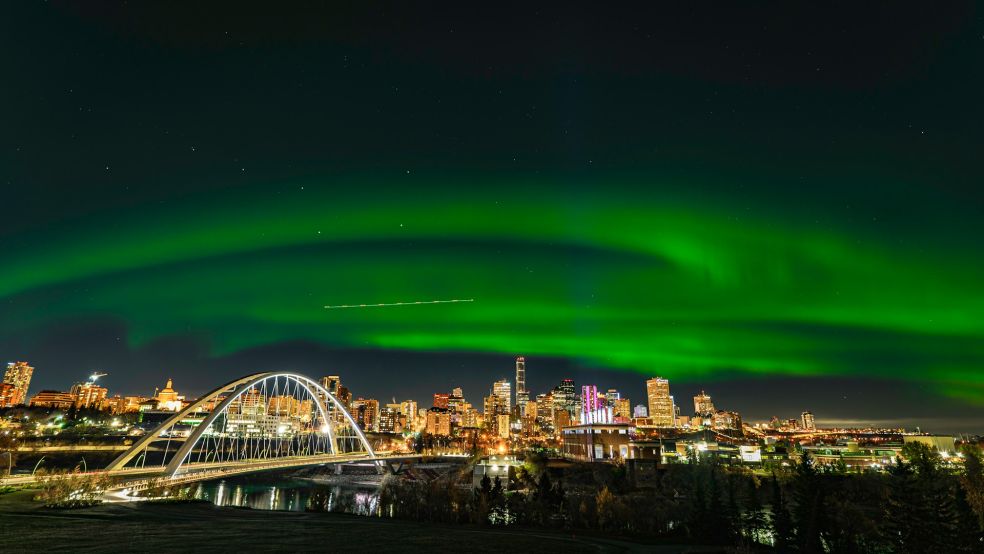
So, Edmonton. Genuinely a cracking base for this, because it's the gateway to the Canadian north. And that's not just a nice line, it's actually why it gets recommended as the spot to begin an aurora trip. You fly in, find your feet under properly dark skies just outside the city, and the whole region opens up from there. You can head deeper north towards Fort McMurray for darker skies and longer odds, or swing south to Banff if you fancy mountains stitched into the same trip. Edmonton's basically the hinge the whole adventure turns on.
Local Tips for Chasing the Lights Near Edmonton
Edmonton sits beautifully far north, so the good news is you don't need some wild storm to catch a display. You just need dark, you need clear, and you need to actually be looking. A few things the locals know that the guidebooks tend to skip.
First, get away from the city glow before you write the night off. Just twenty to thirty minutes east or north of Edmonton the light pollution drops off a cliff, and faint activity you'd never have spotted downtown suddenly pops. Elk Island National Park is a dark sky preserve barely forty five minutes out, and it's a local favourite for good reason.
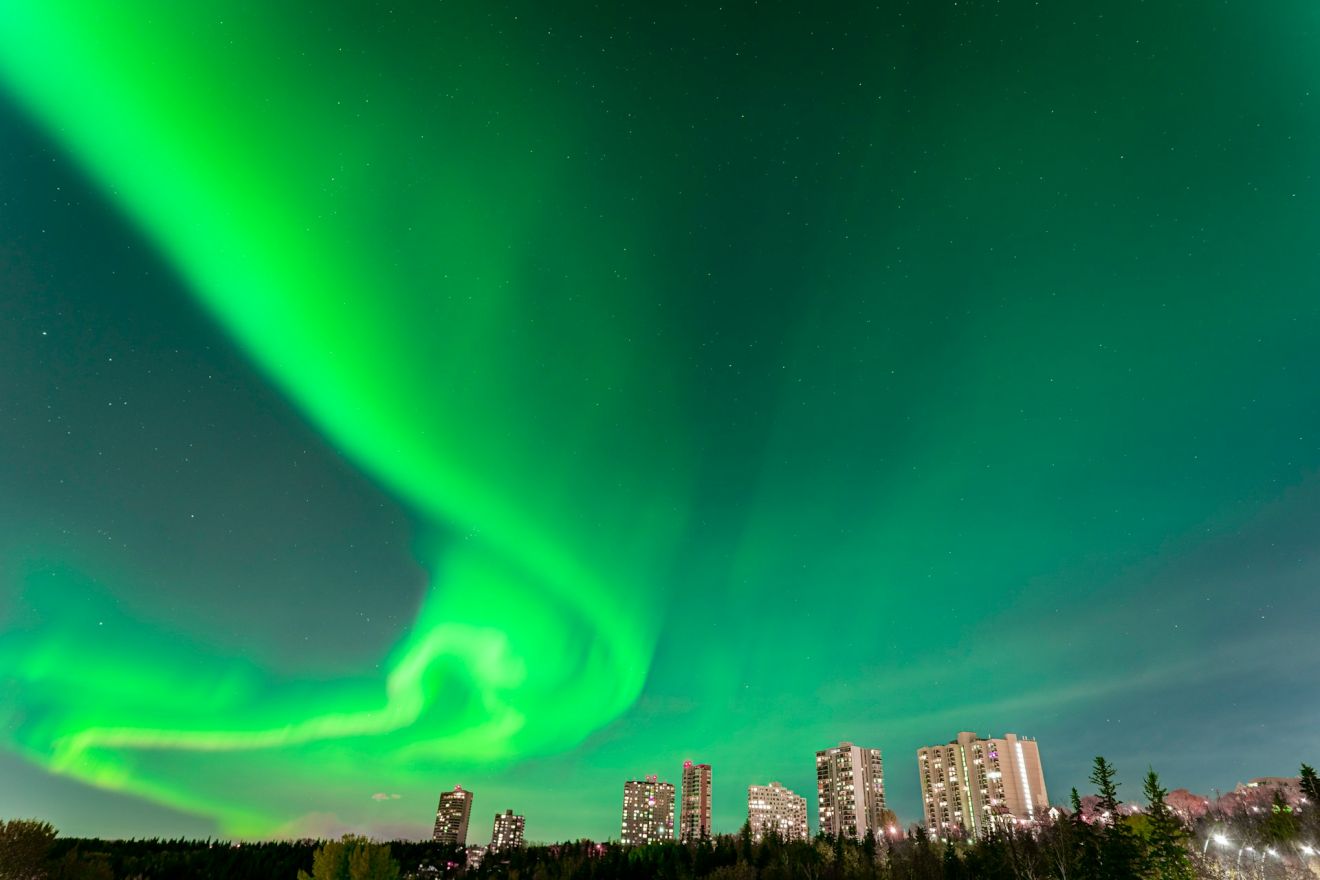
Face north, and give your eyes time. The aurora often starts as this dull grey green smudge that your phone camera picks up long before your eyes do. So take a test shot. If the camera catches colour, stay put, because it frequently builds from there.
And layer up like the cold's trying to finish you off, because in an Alberta winter it quietly is. Clear nights are the coldest nights, and the best displays often come when it's bitterly still. Warm drink, blanket, patience.
Oh, and go out on the quiet nights too. The unforgettable shows are rare, sure, but soft, slow ribbons happen far more often than people expect this far north, and they're gorgeous in their own right.
Frequently Asked Questions
What is the best month to see the northern lights near Edmonton
The best months to see the northern lights near Edmonton run from late August through to early April. These are the months with long, dark nights, since the aurora is invisible against a bright sky and Alberta's summer evenings stay far too light. The deep winter stretch from December to March offers the longest darkness, though it also brings the sharpest cold, so the shoulder months of September and March give many travellers the best balance of dark skies and bearable temperatures.
Do I need a strong geomagnetic storm to see the aurora in Edmonton
You do not need a strong geomagnetic storm to see the aurora in Edmonton. Edmonton sits at a high enough latitude that even modest activity can produce a visible display, especially once you escape the city lights. Clear skies and genuine darkness matter far more than waiting for a rare major storm, and many travellers see their first aurora on a perfectly ordinary night they almost stayed in for.
Why does my aurora app say nothing is happening when others see the lights
Your aurora app likely says nothing is happening because it relies on a single global average that updates slowly and smooths out short, local bursts of activity. A display can flare and fade above you in under an hour while that averaged figure barely moves, so the app shows calm while the sky performs. Watching live solar wind data and the trend across recent updates gives a far truer picture than any single headline number.
How far in advance can the aurora be forecast
The aurora can be forecast reliably only a short way in advance, with the most dependable window being the fifteen to sixty minutes it takes solar wind measured near the Sun to reach Earth. Longer range outlooks of a day or two exist and are useful for trip planning, but they describe the chance of activity rather than a guarantee. This is why a good service focuses on a clear tonight and tomorrow night answer rather than pretending to predict a specific display a week out.
Why do alerts fail when I am out in the wilderness
Alerts fail in the wilderness because the darkest, best viewing spots are usually the places with the weakest phone signal. Most apps push notifications that need a live data connection at the exact moment they fire, so they go silent the moment you leave coverage. A text message based alert is far more likely to reach you on a faint signal, which is why delivery method matters just as much as forecast accuracy when you are far from town.
What should I bring on an aurora chase in Alberta
You should bring serious cold weather layers, a tripod, a blanket and a warm drink on an aurora chase in Alberta. The clearest aurora nights are often the coldest, and you may be standing still for a long time, so warmth keeps you out long enough to actually catch the show. A tripod lets your camera gather the faint early colour that your eyes miss, which often tips you off that a display is building before it becomes obvious overhead.
The Real Takeaway
So here's where it all lands. Treat the northern lights as luck and you'll keep missing them by an hour, every time. Read them as a fast moving event instead, something you can actually follow, and the odds swing hard in your favour.
Stop reading a single number as a verdict. Watch what the sky's actually reacting to. And make sure the right answer can reach you in the dark, far from town, in the exact spot you travelled all that way to stand.
Get that right, and the aurora stops being the story someone else tells at breakfast. It becomes the night you planned, and caught.
Aurora Admin can be found on Instagram at https://www.instagram.com/aurora.notifications/ or directly at auroraadmin.com